
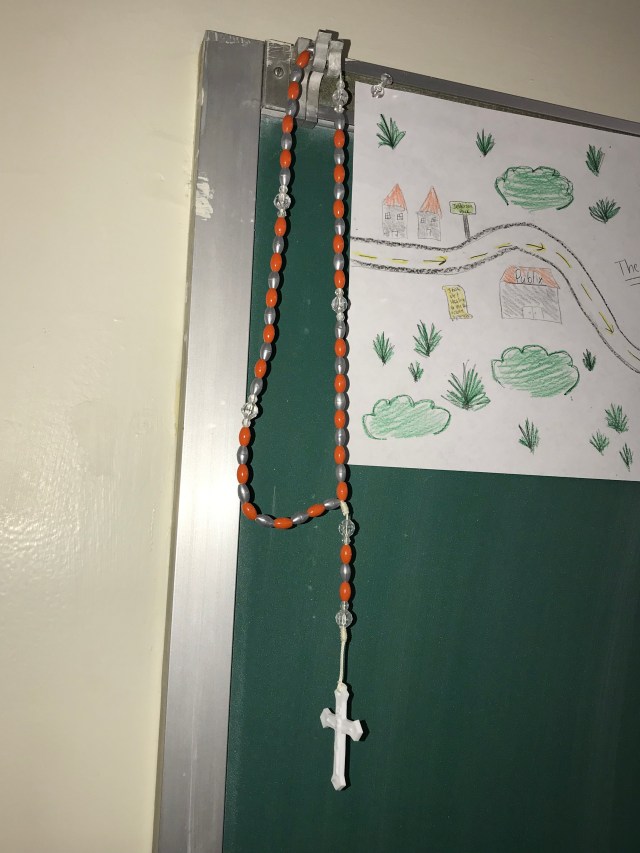
A Catholic Rosary
Native American were the founders of America before Europeans came and slaughtered thousands of tribes. While literature was lucid, it was oral tradition rather than written. Many myths and parables were passed down orally, capturing and making memories of Native American culture and natural world.
English Puritans arrived in New England in 1620 and helped shape American identity. The new settlers possessed traits of hard workers, self-reliance, and determination, in hopes of building a new American. While building a new identity, Puritans documented their lives in diaries, often recording God’s work.
American enlightenment thinkers started conversion with a new thought called Rationalism, a philosophy that stressed the power of reason to discover truth. These enlightenment thinkers heavily influenced Thomas Jefferson and many other writers of The Declaration of Independence. Many began to adopt the practice of reason, using it in literature to help aid and organize the newly founded nation.
Anne Bradstreet wrote a poem based in the Foundations era, called “The Burning of Our House”. In this poem, Bradstreet expressed her thoughts on the burning of her house and her materialistic possessions, which she once took for granted. Edward Taylor writes “Huswifery“. Taylor reflects on how much of his life he wasted living a non-purposeful life, when he should’ve been living an honorable life for God.
Jonathan Edwards wrote the short story, “Sinners in the Hands of an Angry God”. Edwards gives details to people about God and how we should repent and beg God for forgiveness. Unlike some religious leaders today, Edwards said God is angry and vengeful, therefore we should repent.
Works Cited
McDougal (2-6)
 American Literature